
Catharsis-Core
A BDSM Origin Story

We learn about Maslow’s Hierarchy of Needs in sociology class. It’s a simple pyramid-shaped diagram. At the base you have your basic survival needs, such as food and shelter, in the middle you have your psychological needs such as love and belonging, above this you have self-esteem and identity, and at the tippy top you have self-actualization: Your purpose, your true calling.
If you don’t know Maslow’s Hierarchy from the textbooks you might recognize it from the memes. In these edits the whole pyramid is scribbled out and filled up by one delicious concept like: “Being called a Good Girl” or “Cutting into a perfectly ripe avocado.” It’s one of my favorite meme formats. It illustrates how one concept can sustain us and also give us a sense of identity and purpose. It’s simple and silly and sometimes profound.
We creative-types are famous for neglecting our basic needs and we struggle with self-actualization. I’ve known rare few who are restful and content. We’re always searching for our thing, the magic thing that will make everything else click into place. We want to serve a purpose, want to be known and even celebrated, and we reach for something beyond that, even, the very tip of the pyramid: The point of it all.
Sometimes we find ourselves flailing around in the dark trying to figure it out. We experiment with our art and identity and personal style and try out new obsessions. We get things wrong or make a few embarrassing mistakes or commit the sin of “being cringe” because we are trying too hard. There’s no shame in any of it. We are just primitive fire-makers, rubbing sticks and banging rocks together trying to strike a spark.
I’ve done my share of fumbling, but I’ve started a few successful fires as well. After decades of investment, experimentation, and years of therapy, I made some discoveries you might find useful, or at least relatable. This story starts with “good girl,” dips into ancient philosophy, and ends with rear-naked-chokes, to give you some spoilers. I know you aren’t here for a sociology lesson.
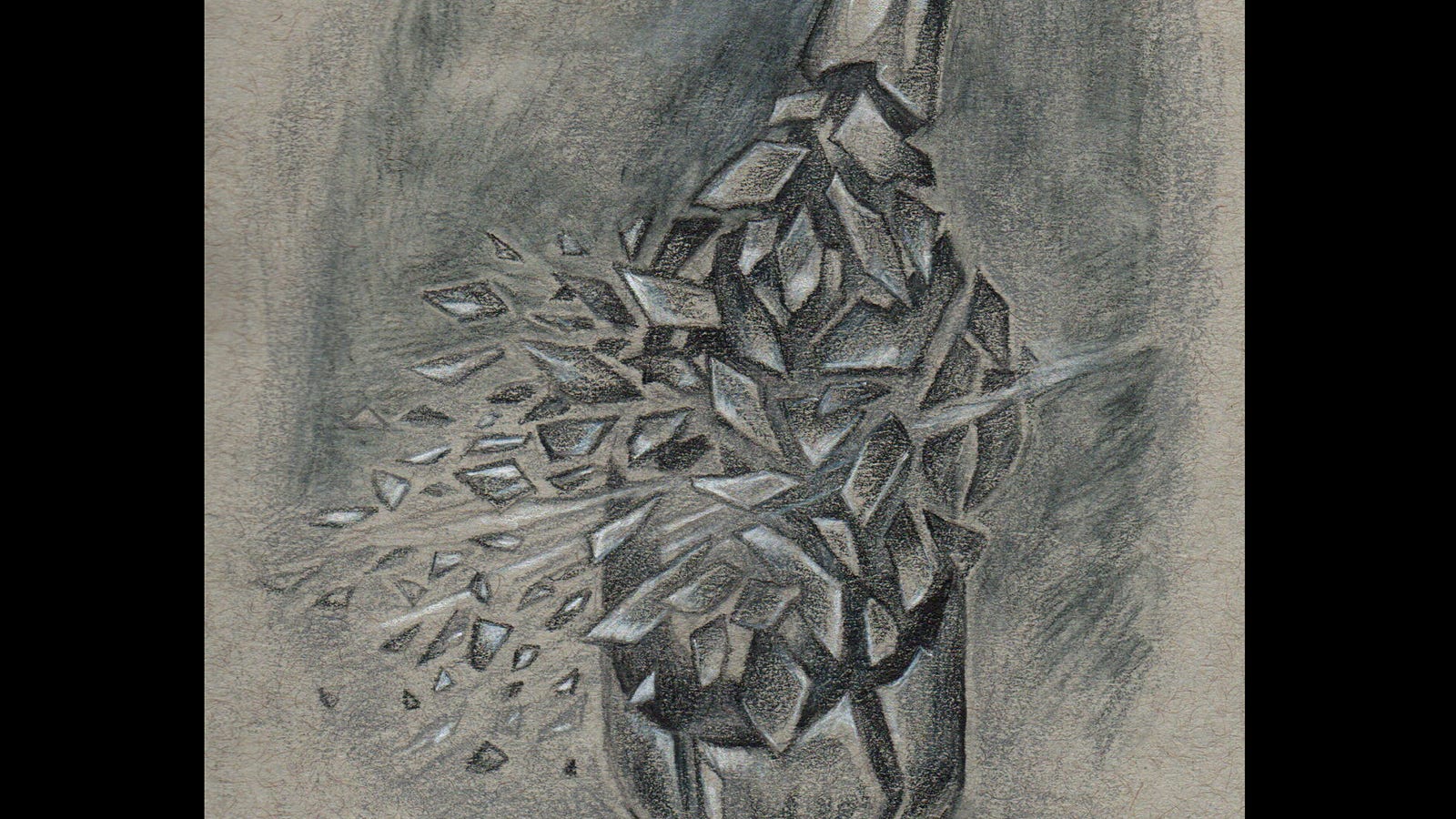
My self-actualization journey began late in life. I’d already spent decades building my artistic career. I was successful, maybe because I was lucky, maybe because I worked myself ragged, or maybe because I was blessed with the right combination of aggression, masochism, and over-abundant energy. Then, Covid lockdown killed that momentum and tipped me into an early mid-life crisis. Without the distraction of my career I had to confront a deep dissatisfaction with my life. I was proud of what I’d achieved but I didn’t really know who I was or where I belonged, and now I feared I would never have the chance to find out.
These were scary times. I was stranded with my family in picturesque rural New England. I was safe, with my basic needs met, and I was humbled by the chaos and suffering in the wider world. I tried to be grateful for what I had but I could feel myself regressing. As an isolated queer person cut off from my city and my friends, I thought it would be safer to tucked myself back into the closet. I figured if I laid low at least I could have a peaceful life, but in my heart, I knew this was not going to be enough for me. I had lost my community and vital part of my identity. My Pyramid of Needs was cut in half at the middle.
It was a cramped half-existence. I could not sleep properly or get comfortable. My body was not built for peace: It craved movement and exploration, intimacy and violence, and I thought my restlessness would destroy me. I could survive maybe another month or two, but I did not want to rot away in that purgatory forever.
As soon as Covid restrictions loosened up I got out of there. The world was coming back to life in spasmic twitches and I pounced upon it, anxious to reclaim my city and to act on all that pent-up ambition. That was when I entered my maximum effort era. I felt called to action, though I had not yet found my calling. There was always something standing in my way, but the obstacle remained a mystery to me. All I had were educated guesses. I knew I was still holding on to a lot of shame and trauma, and I thought, if could purify myself of that, if could fix every damn thing that was wrong with me -- then all the right pieces would just magically click into place and I’d be on my way to glory.
So, I started going to therapy. I became responsible for my health. I survived a series of very gay and very toxic relationships, one overlapping the next. (I figured, even if I could not find love, I could at least inoculate myself against heartbreak.) I was making a lot of mistakes; that was natural. I was learning and growing, and I was freer than I’d ever been in life. But still, I didn’t feel any closer to finding myself. I felt farther from it every day.
By now, I knew what was expected of me and therapy became a rehearsed performance. I was getting up to all kinds of depravity and mischief in the background. I did not report any of this to my therapist, but it was worth paying attention to because these were the moments when I felt like I was finally getting to know myself.
Have you ever asked yourself: “Why am I into this?” Or: “How did I end up here?” Or afterwards: “Why did I put myself through that?”
Why? “Because the devil told me to.” (My therapist would not find that funny.)
It was ironic: I was trying so hard to be good, but I always fumbled these efforts. When I was sinning, however, my aim was true. I was good at playing the villain, the devil, the beast. It was probably one of my most attractive qualities.
So. I got back into BDSM – That was my default. It was a space I’d always been comfortable in, and it promised both thrill and familiarity. Instead of working on building that ideal shell, I became the mechanic of my own inner darkness. I started training to be a proper Dom. I returned to my toolkit and my experiments and expanded repertoire and I soon found enthusiastic friends, lovers, and patrons. I was making progress. No full answers yet, but pieces of the puzzle.
I did learn one very valuable thing in therapy: Like many creative-types, I have ADHD. This explained my restlessness and dopamine-seeking behaviors. The “H” stands for Hyperactive, and this hyperactivity gives us a lot of (often unbridled) mental energy. Without a proper outlet, that extra energy can turn into spirals of anxiety, guilt, addiction, obsession, and so on.
This is why we need our projects and our outlets. I self-medicated by keeping busy, but my needs were more complicated than that. I imagine the ADHD mind as a control panel with all these gauges that always need to be monitored. There are buttons to push and levers to pull, dials for amping things up and pressure valves so we can vent off some steam. We need challenges, and these challenges must be meaty enough to sink our teeth into but not so difficult that they frustrate or overwhelm us. We also need stimulation – And once you’ve gone numb to pleasure, pain is the only thing that does the trick.
I was beginning to understand. I didn’t need a map or a plan. I needed Catharsis.
(Catharsis, and maybe Adderall.)
Catharsis is a concept that dates back to Ancient Greece. It predates psychology, it even predates the concept of the “mind” as we understand it. The Ancient Greeks believed the psyche (soul) was the body’s animating force. It was the source of all our thoughts and instincts and emotions and the core of our identity.
Catharsis was a cleansing ritual for the soul. It was medicine, a stinging ointment, a bitter tincture. It can be experienced actively or passively through art and performance. The favorite vehicle of Catharsis was Tragedy. Here are few famous examples:
In Prometheus Bound the heroic Prometheus steals the secret of fire from the Gods and is captured, terrorized, and tortured as his reward. In Oedipus Rex the titular king accidentally fulfills a prophesy where he kills his own father and marries his own mother, despite his extravagant attempts to avoid this fate. He gouges out his own eyes to punish himself for the blindness of his actions. There are many more, and they are all just as cruel and gruesome. Each drama should come with its own list of trigger warnings. Sometimes there was no moral lesson. The heroes failed, the innocent were punished, and the wicked prevailed.
How was any of this healthy? The Ancient Greeks believed in the healing power of expression. We connect with these characters through empathy and join them on their tragic journey, and when they suffer we are invited to suffer with them. We can experience their glorious heights and devasting lows with no risk to our safety or sanity.
Modern science lends some credibility to these methods. Studies have proven that the simple act of crying out in pain produces chemicals that help to activate the body and regulate the nervous system and even promote the healing process. Profanities, tears, tantrums, these all do the body good. Children know this instinctively. We were meant to suffer but we are not meant to suffer in silence.
The goal catharsis was to cleanse the soul of excess emotions, and one can only purge emotions by expressing them. Obviously, this is not always a pleasant experience. To purge, to express: These are disgusting verbs if you examine them. To “purge” is to vomit or defecate. To “express” literally means to “to squeeze something out,” which is also a nasty image. The word Catharsis refers to menstruation when used in a strictly medical context. It’s all very messy and impolite.
But there is no escaping it. The more we distance ourselves from our animal realities, the stronger their elastic pull. This is why art often dives right into the taboo, and why transgressive media hits so hard. It both repels and fascinates us.
As a Dom, I was helping people to achieve catharsis. My submissive was brave Prometheus chained to the rock while I played the role of vengeful Zeus. They were Oedipus and I was the inescapable prophecy. BDSM is all about dichotomies: Pain and pleasure, praise and punishment, bondage and release. You need to get the balance right, and this requires a lot of communication and fine-tuning. I like to think of it in a mechanical way - ratcheting up the tension, applying pressure and so on. These physical words move us from the cerebral and abstract to the concrete and sensual. It’s all about getting someone out of their head and drawing them into their body.
This can be a struggle for many, myself included. Over the course of millennia Western Civilization has been pushing us in the opposite direction, away from the visceral realities of the body and towards the mind and its abstractions. We look upon our bodies with judgement and shroud them in shame. We have made enemies of our desires, internalizing puritanical beliefs that stress abstinence, denial, and repression.
This trend did not begin with Christianity, as you might expect. Around 400 BCE The Greek philosopher Plato imagined an immortal soul that was distinct from its mortal body. This soul was divided into three parts: logistikon (reason), thymoeides (emotion), and epithymetikon (appetite). Each part resided in a different area of the body, logistikon the head, thymoeides in the heart, and epithymetikon in the guts and loins. These parts did not rule equally. Reason guided the soul towards its higher purpose while the appetite lead it astray.
In the following centuries this trend towards continued, distancing the rational from the carnal. In the 3rd Century AD, Neoplatonic Philosophy arose as a middle ground between ancient pagan philosophy and Medieval Christianity. Catharsis was no longer focused on bodily health and emotional equilibrium but instead on the ascent of the immortal soul. Instead of embodying your passions you transcended them, climbing a ladder towards spiritual perfection and reunion with The One (God).
In Christianity the soul underwent the cathartic purification process after death in Purgatory. (Literally “the place where you purge.”) In this case the mortal body was already removed from the equation. You were not welcomed into heaven until you were cleansed of sinful emotions and mortal attachments.
I imagine this Catharsis as an alchemical process, a metaphorical burning. Hell, essentially. This may sound extreme. We imagine hell as the ultimate punishment, a garbage dump where souls, beyond hope of redemption, are cast down to rot forever, but you will not find any description of this in the bible. “Hell” is a word of heathen origin, and its subterranean imagery was borrowed from classic myths of Tartarus and Hades. The demon infested, fire-and-brimstone hell we are familiar with is the product of artists, writers, and propagandists, mapped out in Dante Alighieri’s Divine Comedy and illustrated in Hieronymus Bosch’s “Garden of Earthly Delights,” among many others. The depictions were horrific but passionate and lurid, even pornographic. Cathartic imagery in its purest form. You could pass through hell, though not unchanged.
If the dungeon was the underworld, then I played the role of Dante the explorer, or maybe his tour-guide Virgil. I beheld the wonders and horrors but I kept a clinical distance. I adopted a businesslike attitude by default. I was performing a service, after all. For me, BDSM was exercise of empathy and imagination but it was not a fully embodied experience. Secretly I envied my submissive partners. They were experiencing something transformative while I remained constant. I was still holding on to control, guarding my pride and my shame. If I was going to experience true catharsis a sacrifice needed to be made. I needed to take the gloves off and get my hands dirty.
There were some dungeon activities I participated in for my own pleasure and my favorite of these was wrestling. I thought I was pretty good at it, but to be fair my partners were probably just eager to submit so we could move on to their favorite part. Less fun for me. This went on until I found one combatant who gave me the fight I craved. Round after round he turned me over and confounded my every attempt to pin him down. I asked him where he learned all these tricks. Brazilian Jujitsu, he answered. How exotic. Months later I signed up for a BJJ trial class and the rest was history.
Jujitsu translates to “The Gentle Way,” – This means there is no weapon or striking involved. We typically begin with judo takedowns until both parties are on the floor and what follows is a fight for survival. My coaches were not coy about this fact. I was immediately thrown to the wolves, and that’s what got me hooked. There was no shadowboxing or emphasis on proper form – Instead, I got constant contact and resistance. It was a puzzle of bodies, both cerebral and intimate, a game of strategy and improvisation, of dominance and submission, and all of this suited me perfectly.
I don’t let my fancy words fool you, I remain a fumbling novice. My teammates regularly mop the floor with me. “Top in the bedroom but bottom on the mats,” I joke. In the beginning I feared embarrassment and injury. My body was tense, my brain scrambled, and my heart buzzed with anxiety. Now my body takes me there; I don’t even need to think about it. There is a ritual to it, but there are also surprises: New pains and predicaments, new challenges, and failure after failure, but I love it, I welcome it, and I keep coming back for more.
When I am there my mind is quiet. When I am thrown or crushed or choked near to blacking out, when my joints twisted to their limits, when our sweaty bodies are tangled up in kama-sutra like poses, I feel things I had never allowed myself to feel. It stirs up all the sediment of my soul, loosening what once was stuck and shifting things back into alignment. All those messy, unconfessed emotions are digested and organized and sometimes even laid them to rest. After years of psychoanalysis, trying and failing to untangle the gordian knot in my head, I finally found peace through violence.
I know it sounds paradoxical and it makes no sense in theory, but it is an epiphany in practice. Catharsis is not about getting your fix or pushing things to the extreme: It is an exercise in sensitivity and moderation. It’s about burning bright without burning out. Catharsis calms my restless heart and makes me a gentler person. It is the concept that fills up my pyramid-of-needs from base to tip.
There’s a lot of self-help advice for creatives out there, but most of it is toxic positivity and love-and-light nonsense. At best, we end up building these idealized shells around ourselves with all our ugly truths and insecurities tucked away inside. We limit ourselves because we fear embarrassment and disgrace and pain and ugliness and failure.
I am not a coach or a therapist, and I cannot light your way forward, but I can tell you this from experience: Sometimes, all you need to do is fumble around in the darkness and get to know yourself. This before anything else. I don’t know what you’re looking for, but if I were to hazard a guess, it’s not up in the clouds with the angels; It’s down in the dirt where the real things grow. So, get down and get dirty.